





Reflections on AI, payments and the opportunity for credit unions
Adrian Moise | Founder and CEO, Aequilibrium
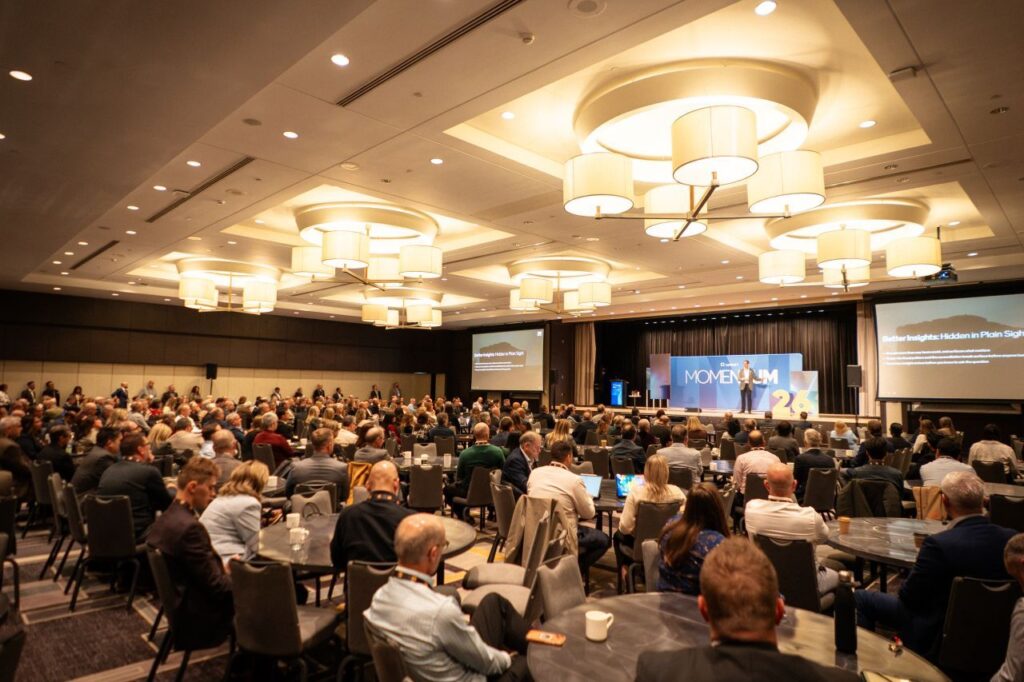
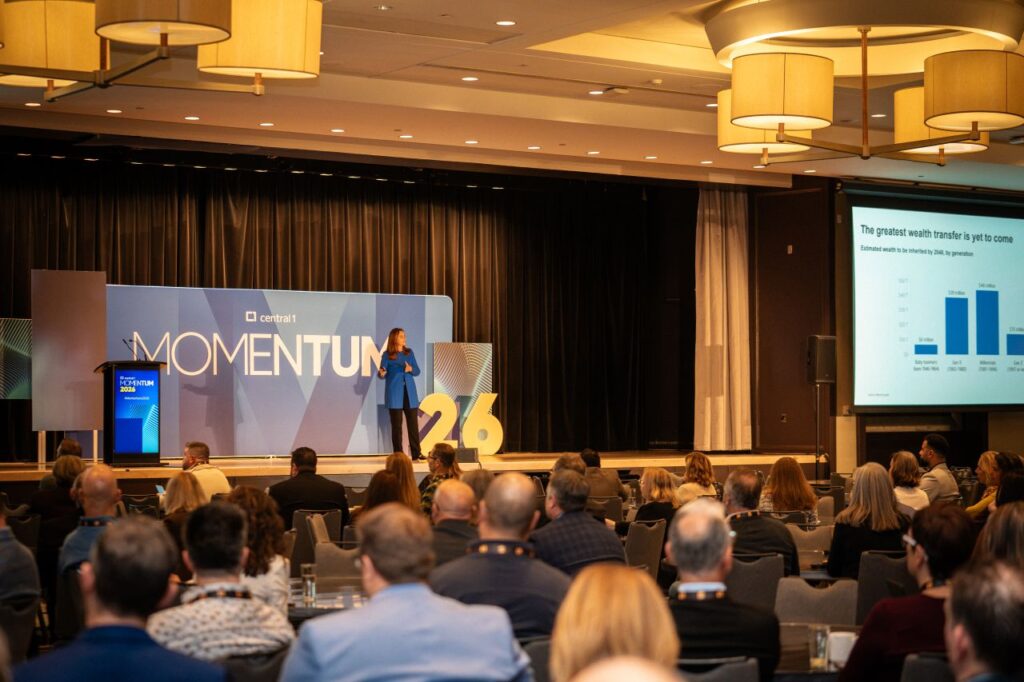
It was a pleasure to spend a few days in Montreal at Central 1’s Momentum 2026, reconnecting with credit union leaders and partners and discussing where our industry is heading.
There was plenty to talk about: real-time payments, AI, digital banking migrations, economic uncertainty and the future of Canada’s banking system. What stayed with me most were the leaders willing to challenge how banking works today and share what they are doing to change it. Across the sessions, I kept coming back to a question: how will all this investment translate into better experiences and financial outcomes for members?
At Aequilibrium, we see how much work sits between choosing a platform and realizing its value. Momentum offered some encouraging examples of institutions tackling that challenge, along with a few important questions about what comes next.
Wellington Holbrook on reimagining the banking experience
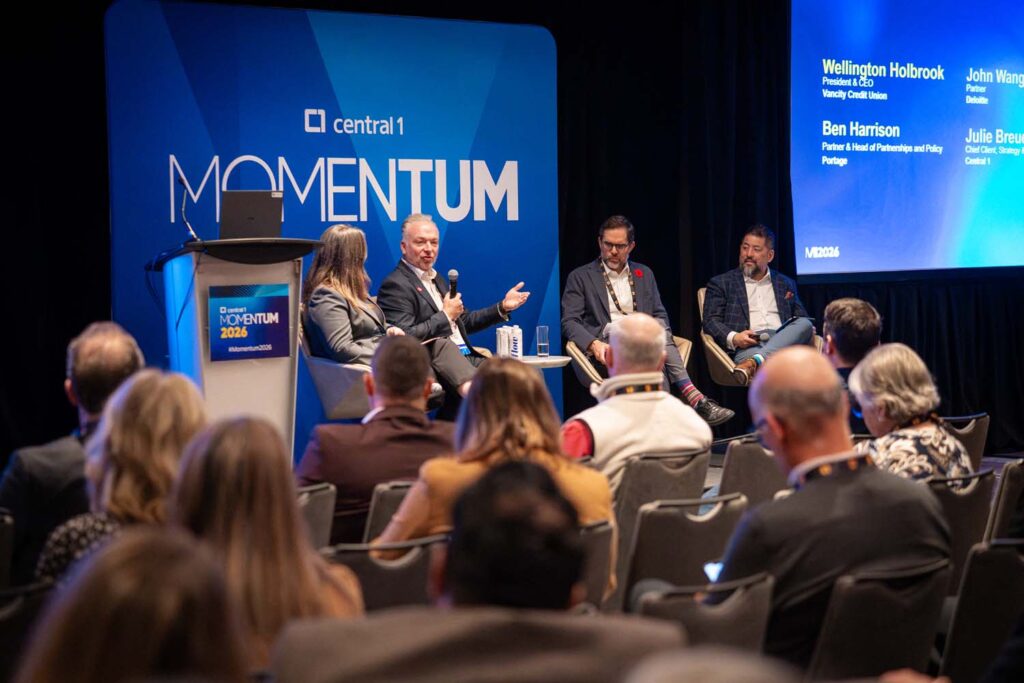
Vancity President and CEO Wellington Holbrook delivered one of the clearest challenges of the conference:
“If we think five years from now digital banking is going to look like it does today, we’re fooling ourselves.”
During the panel on making Canada’s banking system fit for the 21st century, I asked about something we often encounter in transformation programs: deployment does not equal adoption. A significant investment in digital or core banking does not automatically improve the member experience. Wellington’s response went well beyond improving an app. He described Vancity’s work toward an AI-enabled banking experience and operating model through its banking subsidiary, while acknowledging the need to test whether Canadians are ready for that approach.
That is an important question. Much of digital banking still asks members to navigate an institution’s structure: find the account, select the product, locate the right menu, complete the transaction. There is an opportunity to organize more of the experience around what the person is trying to accomplish. For me, the most compelling part was his connection between AI and the purpose of credit unions:
“AI is going to enable us to solve problems for folks who’ve never had access.”
He spoke about the economics of personalized financial support and the opportunity to extend it to people historically underserved. He also acknowledged the ethical and environmental questions that come with AI.
That is a direction worth pursuing. A member starting a career, managing irregular income or preparing for retirement should be able to access relevant guidance. Technology can help make that service viable at greater scale. We still need to design it so people understand it, trust it, and remain in control.
Darrell Jaggers on making transformation an enterprise effort
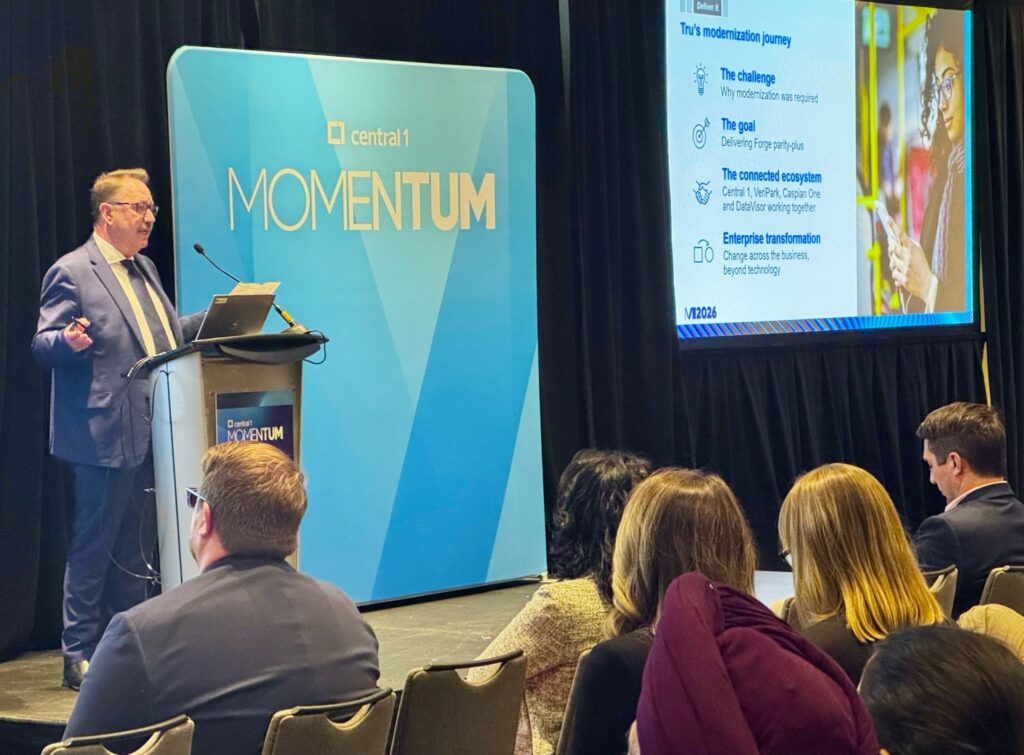
Tru Cooperative Bank’s CIO and Chief Transformation Officer Darrell Jaggers brought a practical perspective to the Connected Payments Journey session with Central 1 and VeriPark. He described Tru’s move from Forge and MemberDirect to VeriPark, the importance of defining scope through “Forge Parity Plus,” and the value of working with a coalition of credit unions and partners to create reusable capabilities.
What stood out to me was how much of his presentation focused on people. Members needed help with devices, passwords, and biometrics. Branch and contact center teams needed the knowledge and tools to support them. Leadership needed to agree on what success looked like.
Darrell also shared an unexpected benefit. Conversations about the migration opened the door to discussions about members’ broader financial needs. He reported that those interactions supported business and membership growth during the transformation. A migration creates a moment of contact with members. With the right preparation, that moment can strengthen the relationship.
This is why we encourage credit unions to define success beyond the launch date. Can members complete the tasks that matter? Are business permissions and approval workflows working? Does the platform perform under peak demand? Can staff help someone who is struggling?
The answers require quality assurance, member validation and operational preparation throughout delivery. They also require ownership across the full journey, especially when several vendors and systems contribute to one experience.
Chris Inniss on the changing build versus buy decision
Mainstreet Credit Union President and CEO Chris Inniss, together with Audit Committee Chair Mary Gillett, shared a particularly interesting presentation: From Buyer to Builder.
Their starting point was familiar. Institutions often adapt their processes to the software available. Mainstreet is exploring how AI-assisted development lets it build tools that fit its own data, advice model, and member needs, alongside the vendor platforms it continues to use.
The examples made the discussion concrete. IntelliPrep, a tool that prepares a member brief for advisors in about ten seconds, was identified as being in production. Other tools, including commercial loan review and risk reporting capabilities, were at different stages of development, testing, or parallel operation.
Mary’s governance perspective made the presentation especially valuable. Their framework distinguishes experimentation, pilots, and production, with named owners and explicit checks before staff can rely on a tool. They also acknowledged unresolved risks, including dependence on a key individual and the need for sustainable ownership.
One line in their presentation captured the discipline behind the work:
“Nothing is relied on until it passes a gate.”
For credit unions, this opens a more useful conversation about when to build, buy or partner. Shared infrastructure and established platforms can provide the foundation. Targeted tools can help institutions deliver the services that make them distinctive, provided they have the capacity to maintain and govern them.
Mark McLoughlin on questioning the economics of banking
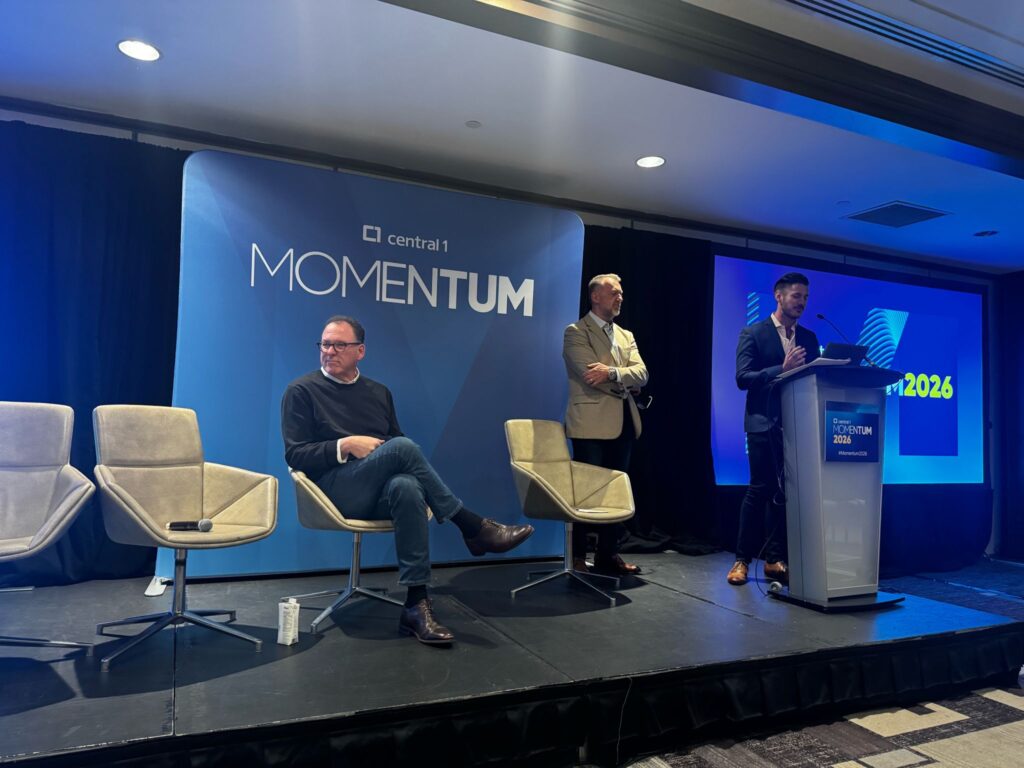
Kootenay Savings President and CEO Mark McLoughlin and Chief Risk Officer Mike Bushore challenged a different set of assumptions in their Sentinel presentation. They explored the combined effects of real-time rails, open banking, atomic settlement and agentic AI, and what those changes could mean for deposit economics, decision-making and the operating model of a credit union.
Their scenarios raised a difficult question: how much of today’s business depends on money being inconvenient to move, or on members accepting delays? The projections were scenarios, not certainties. The underlying challenge is still worth taking seriously. As members gain better information and easier ways to act, institutions will need to keep earning their relationships through the value they provide.
I also appreciated their challenge to conventional thinking about scale. They emphasized the ability to understand the institution’s position and respond intelligently, alongside its balance sheet size.
From our perspective, this connects member experience with operating performance. Every unnecessary handoff, repeated data entry, or stalled approval consumes capacity and makes someone wait. Improving those processes can create room for better service and growth.
Real-time payments need a clear member purpose
The payments sessions brought the discussion back to everyday needs. Lise Godbout and Scott Robertson clarified the settlement model and the operational implications of the Real-Time Rail. In response to my question about differentiation, the discussion shifted to practical opportunities: fewer restrictions around business hours, higher payment limits, and richer information accompanying a payment.
Jon Purther’s Payments Canada presentation reinforced the importance of solving familiar problems. Fees remained a leading frustration for consumers and businesses; businesses also faced challenges with payment timing, processing delays and cash flow.
In Beyond the Milestones, the panel explored how faster wage access could support workers and how permissioned financial data and real-time payments could eventually come together to improve access to financing.
These examples give credit unions a useful way to prioritize. Start with a member need, such as paying a supplier or receiving income, and work through the entire journey. Include fraud decisions, liquidity, reconciliation, and support. A payment available around the clock needs a service experience designed to support it.
AI makes trust and human judgment more valuable
The agentic payments discussion with Visa’s Dan Iwachiw and Central 1’s Dan Semmens raised another question I took away from Montreal: who owns the member relationship when an AI agent compares options and initiates transactions?
If banking increasingly happens through an agent, credit unions will need to make their services accessible in new ways. They will also need to make their value visible through trustworthy decisions, clear permissions, and dependable help when something goes wrong.
The presentations offered an important balance to the excitement. PMG Intelligence’s illustrative member scenario showed how a generic marketing offer could miss signs of financial stress. Better use of context could prompt a relevant conversation instead. That is a useful application of data: helping an advisor recognize when someone needs support.
Ramy Nassar’s AI material emphasized verification, transparency, and accountable ownership. Estelle Métayer’s presentation challenged leaders to examine their assumptions and consider which decisions require human judgment.
These themes connect with our work at AEQ on Human-AI Pods, bringing people and AI together across product, design, engineering and testing. The opportunity is to improve how teams move from understanding a need to delivering a validated solution. The people doing that work need the authority and skills to question the output and own the result.
What I am bringing back from Montreal
My priorities coming out of Momentum are practical:
- measure what improves for members,
- make adoption part of the transformation plan,
- give teams a clear way to experiment with AI while maintaining accountability.
We can also do more together. Tru’s coalition approach, Mainstreet’s candor about its development and governance journey, and Kootenay’s willingness to challenge established assumptions all create opportunities for others to learn. The cooperative model gives credit unions a strong basis for sharing infrastructure and experience while responding to their communities’ needs.

Thank you to Central 1 for bringing these conversations together, and to Wellington Holbrook, Darrell Jaggers, Chris Inniss, Mark McLoughlin and their fellow presenters for sharing their thinking so openly.
I left Montreal encouraged by the ambition in the room. I look forward to seeing how these ideas translate into services that help members make better decisions, manage their finances, and feel more confident about their future.
